Every approved MAEKO post that isn't live yet. Tap a picture for the full-size file, or use Download. Copy the caption, post. Checked at 13:40 today: nothing new has gone live since yesterday's Food Loss & Waste Day post. Every caption was then checked again against MAEKO's claim rules and our live posts.
Post today · Wed 30 Sep
Both are checked and ready.
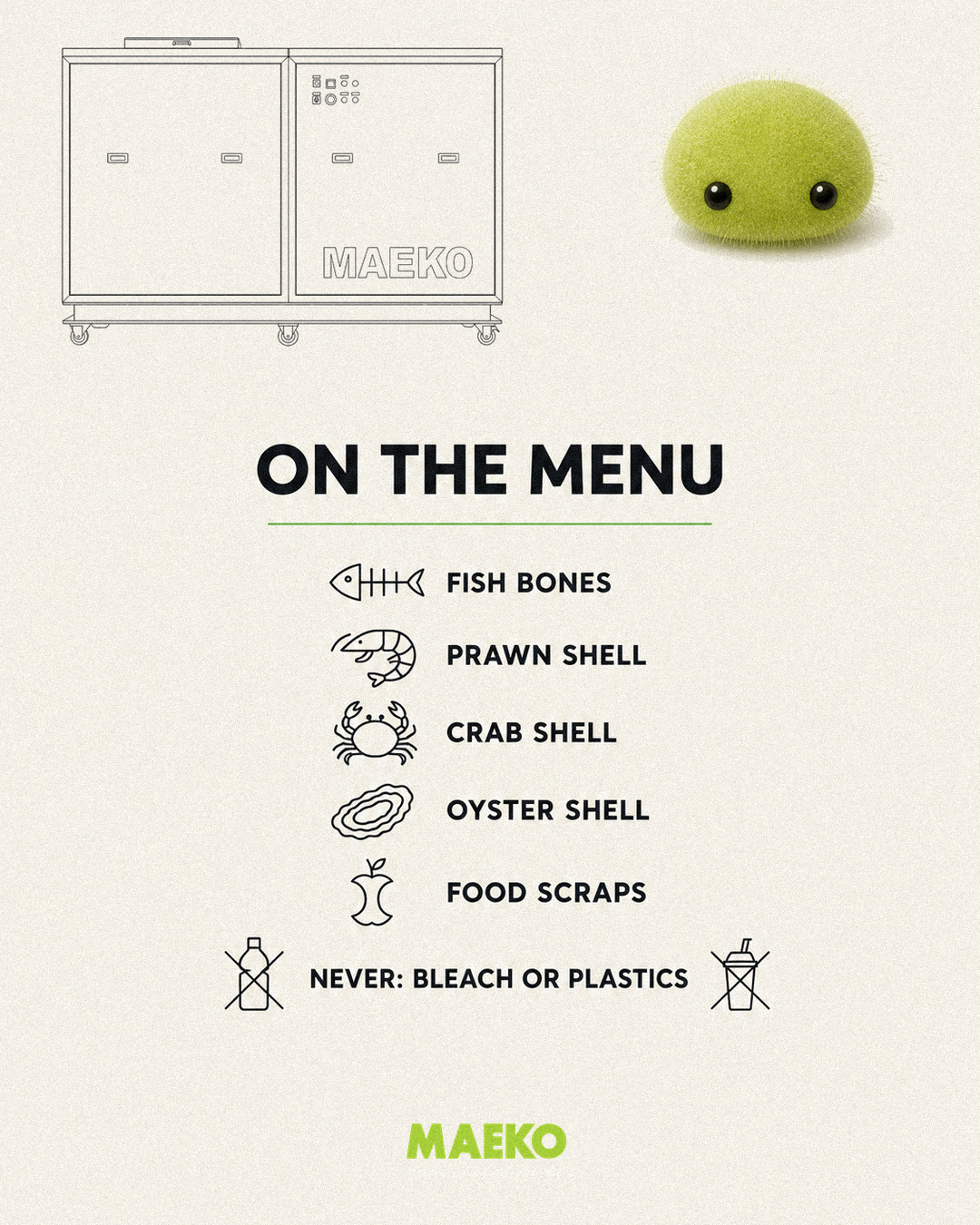
On the menu (Speedo)
Caption ready
Instagram + Facebook (same caption on both) · was planned for Mon 5 Oct
Meet Speedo, the live culture that does the work inside a MAEKO machine.

In this machine it works through the toughest kitchen waste, bones and shells included, and turns a full day of scraps into a dry compost you can use, in one 24-hour cycle. Keep bleach and plastics out of it. Feed it right and it keeps working.

DM us to find out more.

#foodwaste #Malaysia #foodwastemachine #FandB #circulareconomy
Approved caption, lightly fixed: it no longer says every MAEKO machine takes bones, and it ends with "DM us".
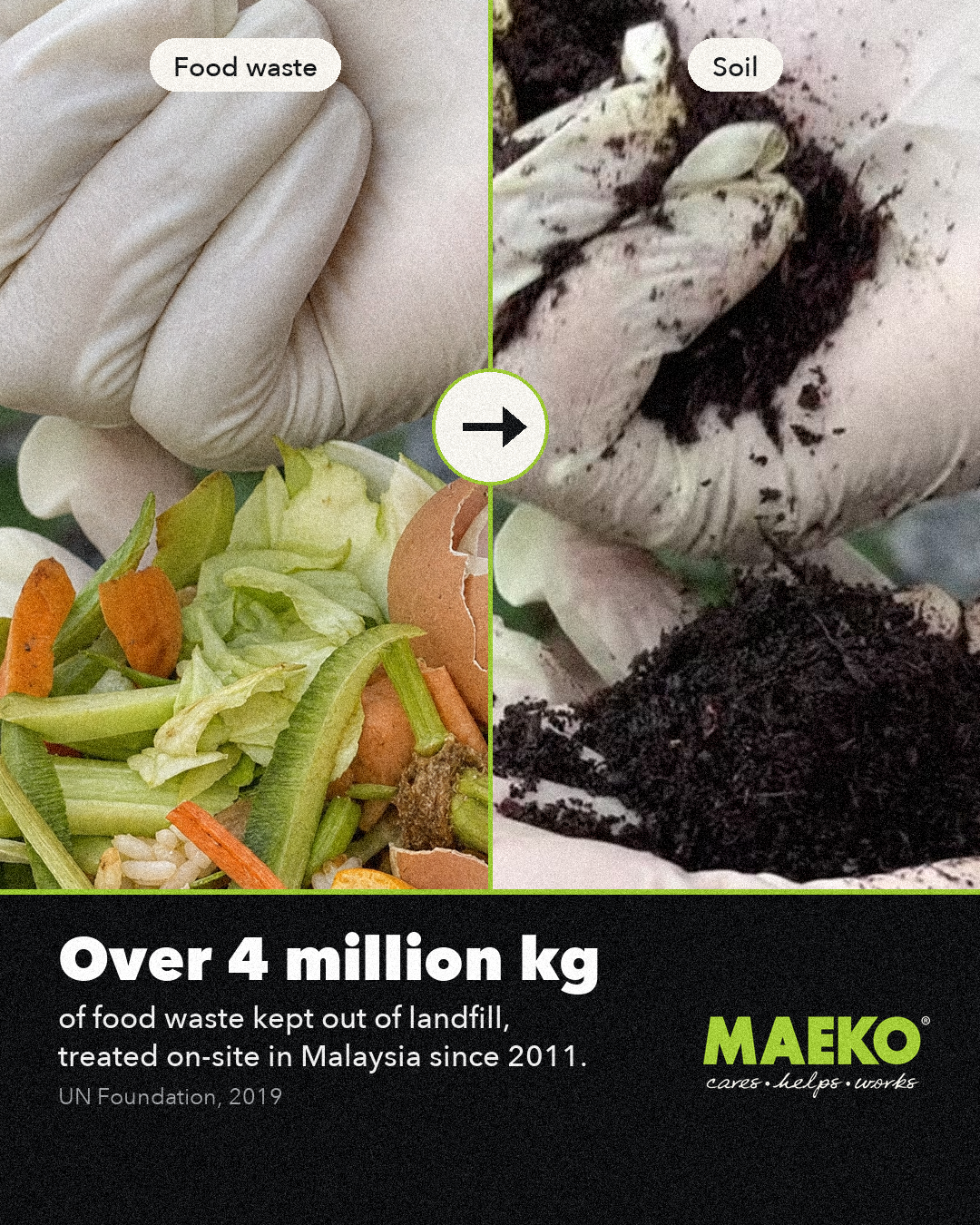
The scraps a hotel kitchen sets aside every night are a resource in the wrong place.

Treated on-site, up to approximately 80% of the volume is gone in one 24-hour cycle. What is left is a dry compost you can use, not a full skip waiting for a lorry.

For your ESG report, use the number you can measure yourself on-site: how much your waste volume drops.

MAEKO has treated food waste on-site in Malaysia since 2011: over 4 million kilograms, as reported by the UN Foundation, September 2019.

Comment "MAEKO" for more enquiries.

#FoodWaste #FoodWasteMalaysia #Sustainability #ESG #Malaysia
Approved text, tidied: shorter first line, and the 4 million kg figure now carries its source and date.
Instagram + Facebook · next, in this order
Monday, Wednesday and Friday at 12:30. Spaced so no two posts on the same topic land close together.
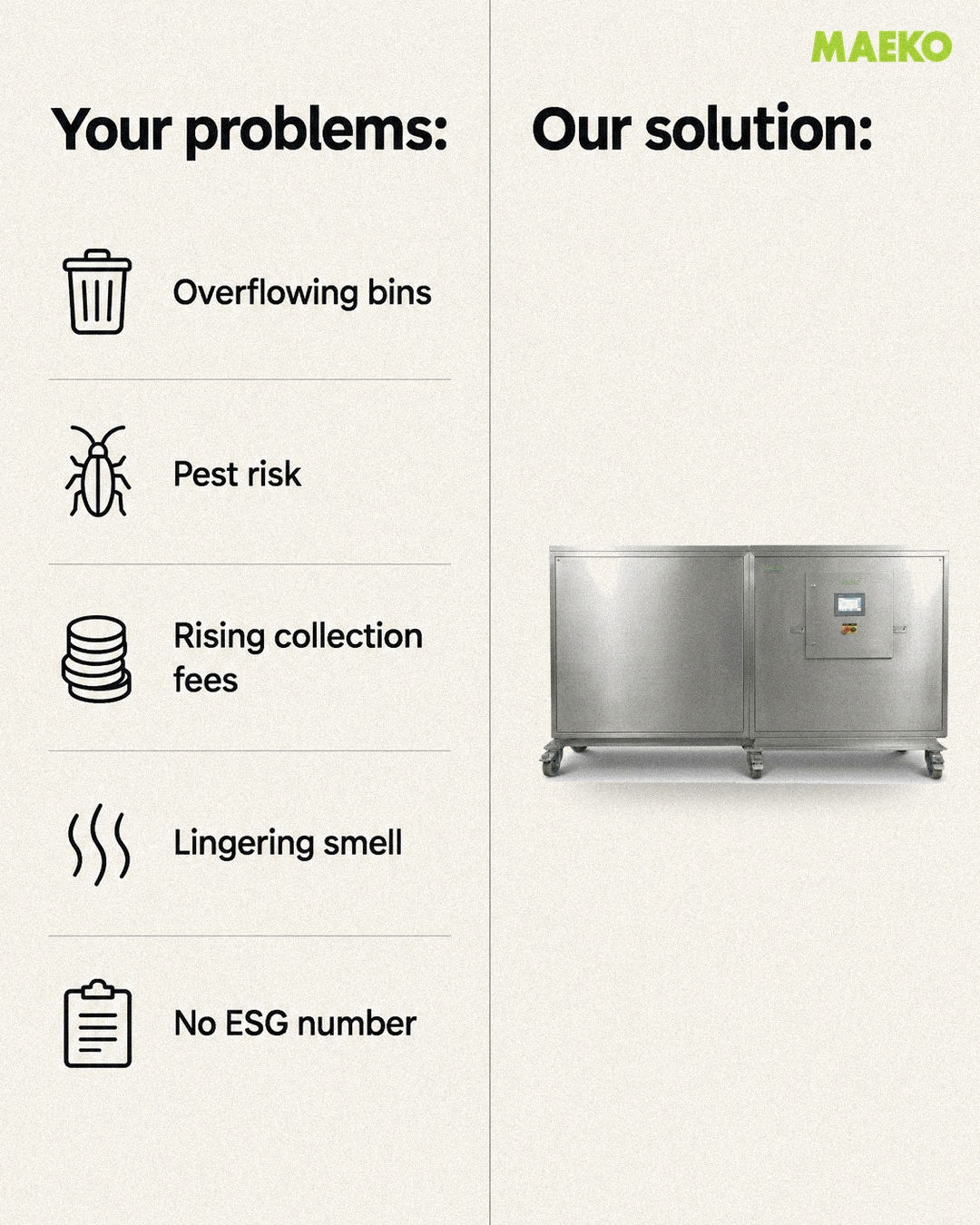
Your problems, our solution
New caption: read once
Instagram + Facebook (same caption on both) · Fri 2 Oct, unless the IGEM carousel takes that slot
Most of these start with food waste sitting in a bin, waiting for the lorry.

Scraps in a bin take up room and draw pests, and the more there is to collect, the more pickups you need. With a MAEKO machine on site, the day's scraps go in at close of service. One 24-hour cycle cuts their volume by up to approximately 80%, so there is less to store and fewer pickups.

DM us to find out more.

#foodwaste #Malaysia #foodwastemachine #FandB #circulareconomy
New caption, matched to this picture. No smell promise, and no billing claim we can't back up.
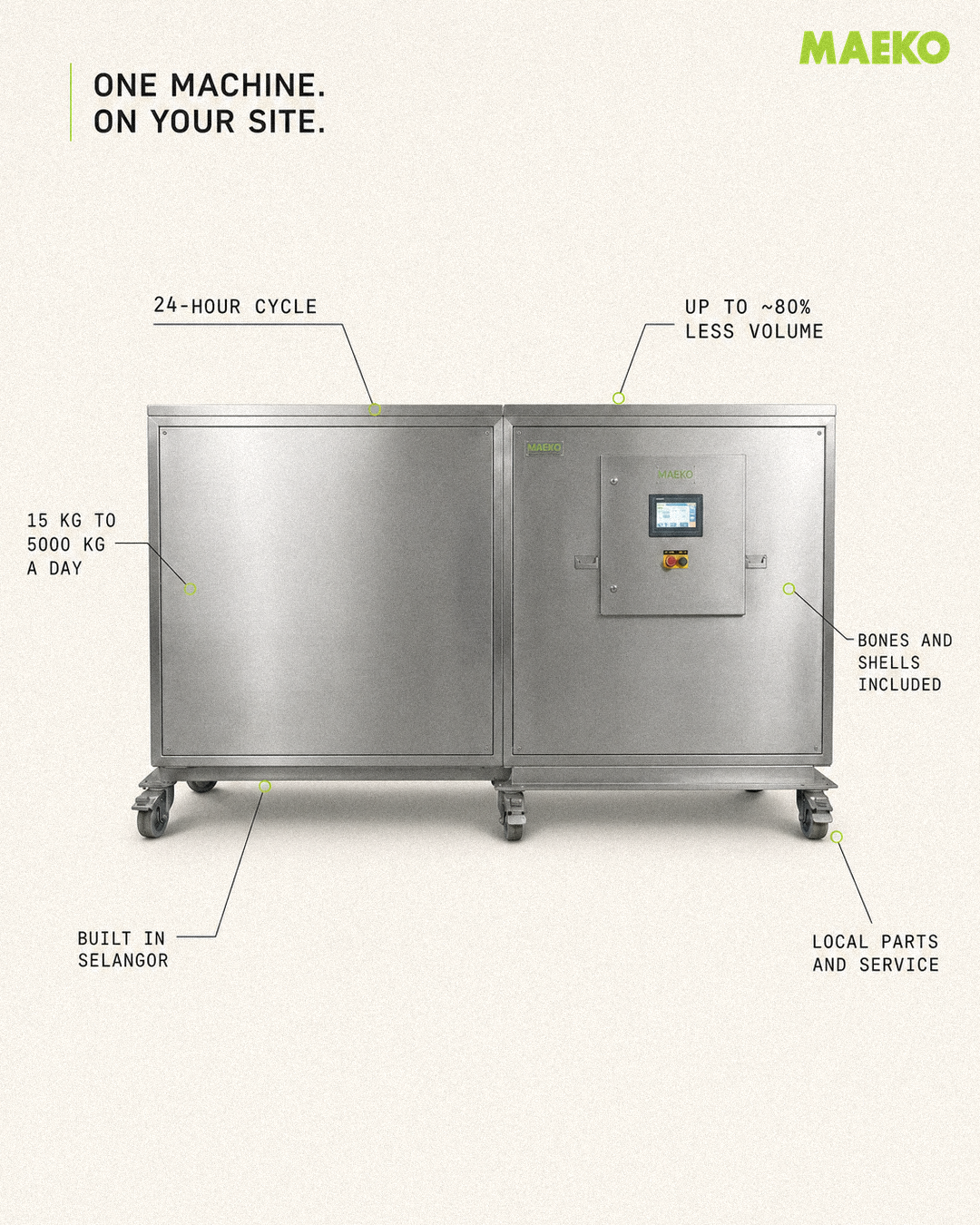
One machine. On your site.
New caption: read once
Instagram + Facebook (same caption on both) · the week after IGEM
Where does your kitchen's food waste spend the night?

In most hotels and restaurants it sits in bags by the loading bay, waiting for the lorry. A MAEKO machine stands in that same back-of-house space and starts on the scraps at close of service. You still need a collector, just a smaller, less frequent one.

DM us to find out more.

#foodwaste #Malaysia #foodwastemachine #FandB #circulareconomy
New caption. The approved one was almost the same as the 9 Sep "Made in Malaysia" post.
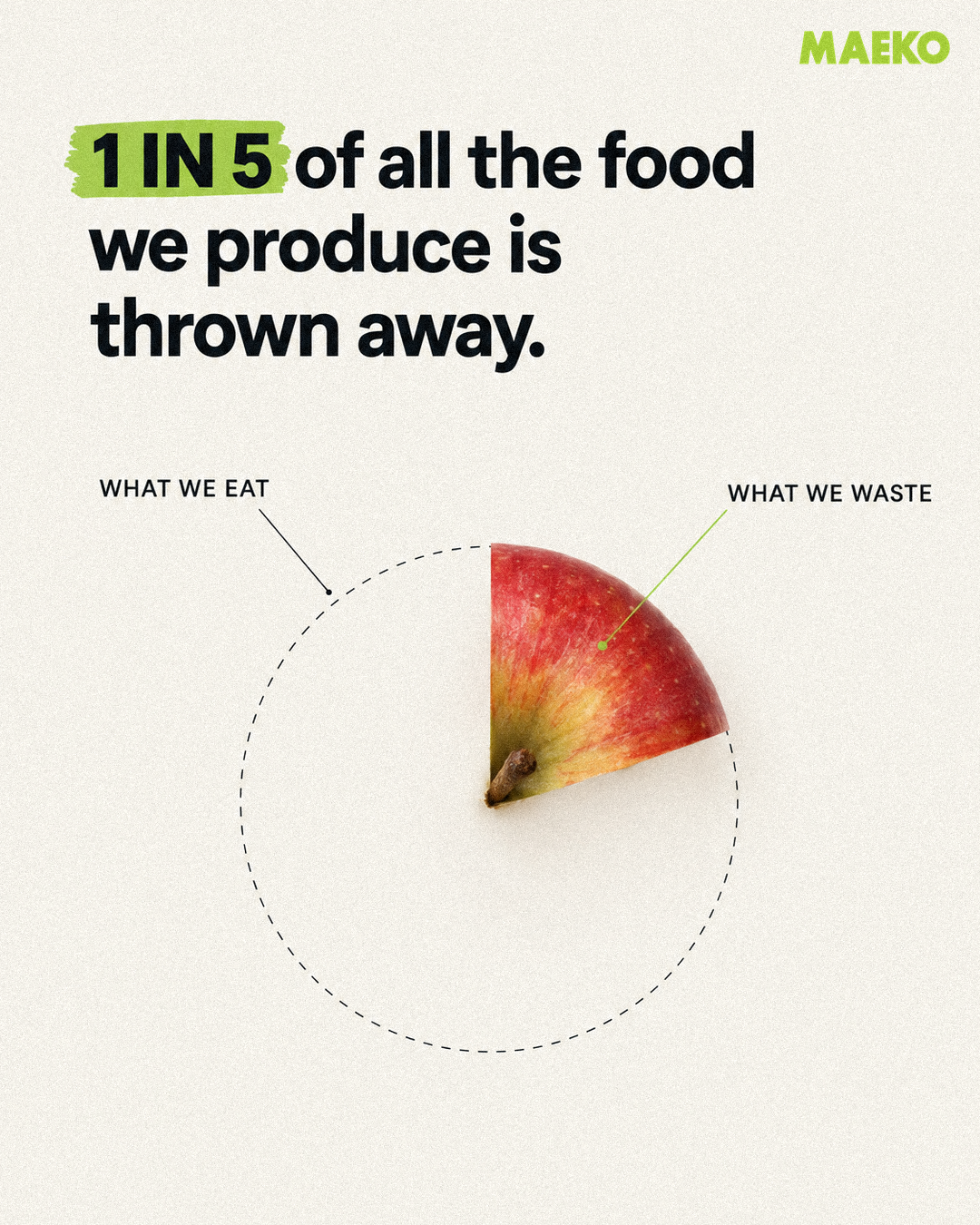
1 in 5 of all food is thrown away
New caption: read once
Instagram + Facebook (same caption on both) · the week after IGEM
Almost a fifth of the food that reaches shops, restaurants and homes is wasted.

At the same time, 783 million people go hungry (UNEP Food Waste Index Report 2024). Sorting food scraps and treating them where they are made keeps them out of the landfill and turns them into a dry compost you can use.

Share to raise awareness. DM us to find out more.

#foodwaste #Malaysia #sustainability #circulareconomy #foodsecurity
Caption corrected: UNEP's figure is almost a fifth of the food reaching shops, restaurants and homes. Keep it away from yesterday's UNEP post.
Heads-up: The picture's headline says "1 in 5 of all the food we produce"; the caption uses UNEP's exact wording.
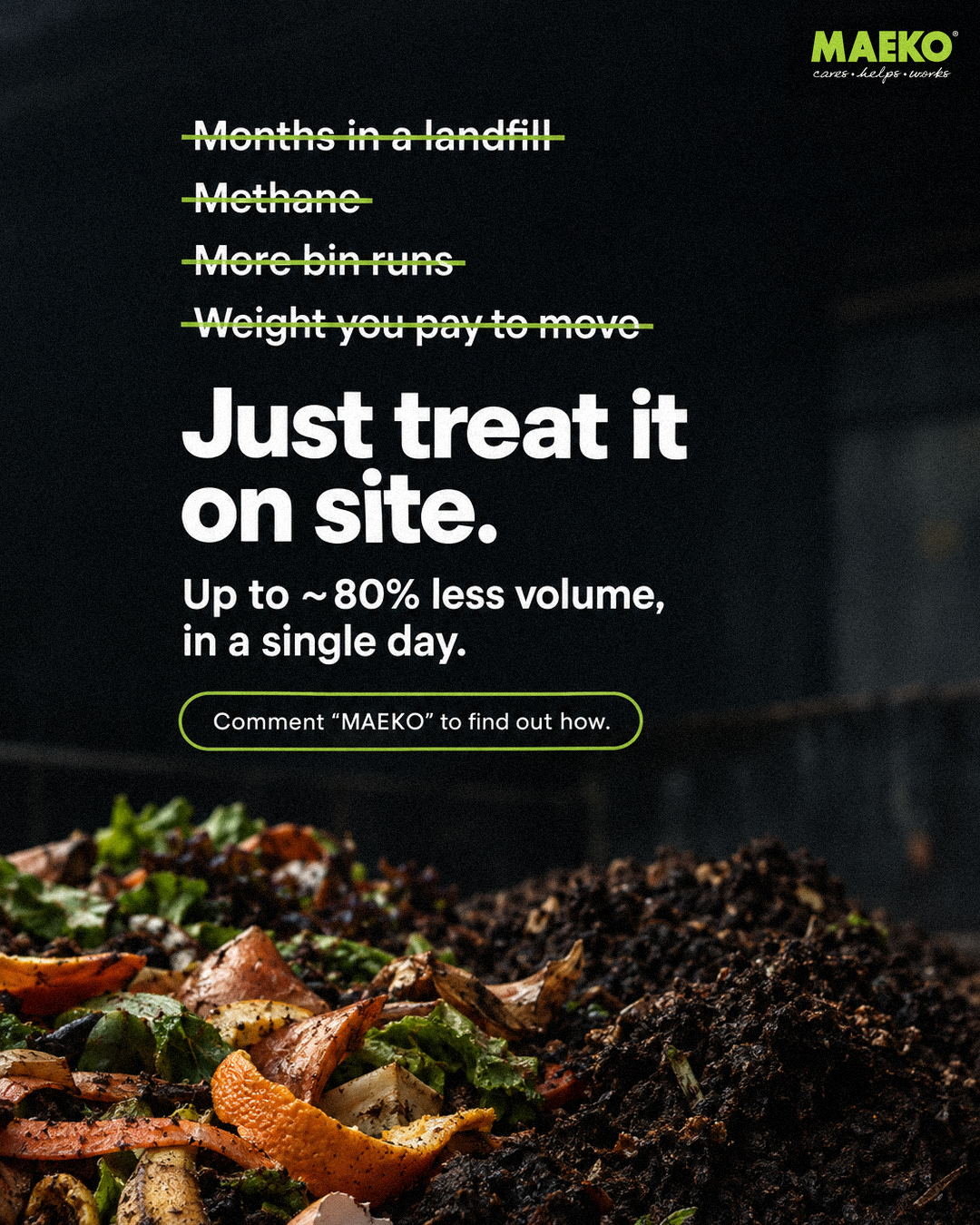
Just treat it on site
New caption: read once
Instagram + Facebook (same caption on both) · from about 12 Oct
Most of that list starts the moment food waste leaves your kitchen.

Scraps that go into a MAEKO machine at close of service stay on site. One 24-hour cycle cuts their volume by up to approximately 80%, so the bin fills more slowly and the lorry comes less often. Less collection, not none.

DM us to find out more.

#foodwaste #Malaysia #foodwastemachine #FandB #circulareconomy
New caption, matched to this picture. Wait until about 12 Oct: it covers the same points as the 26 Sep Landfill vs On-site post.
Heads-up: The picture says Comment "MAEKO"; the caption ends with DM us. Both are fine.
LinkedIn · next
Post these on different days: they make the same argument.
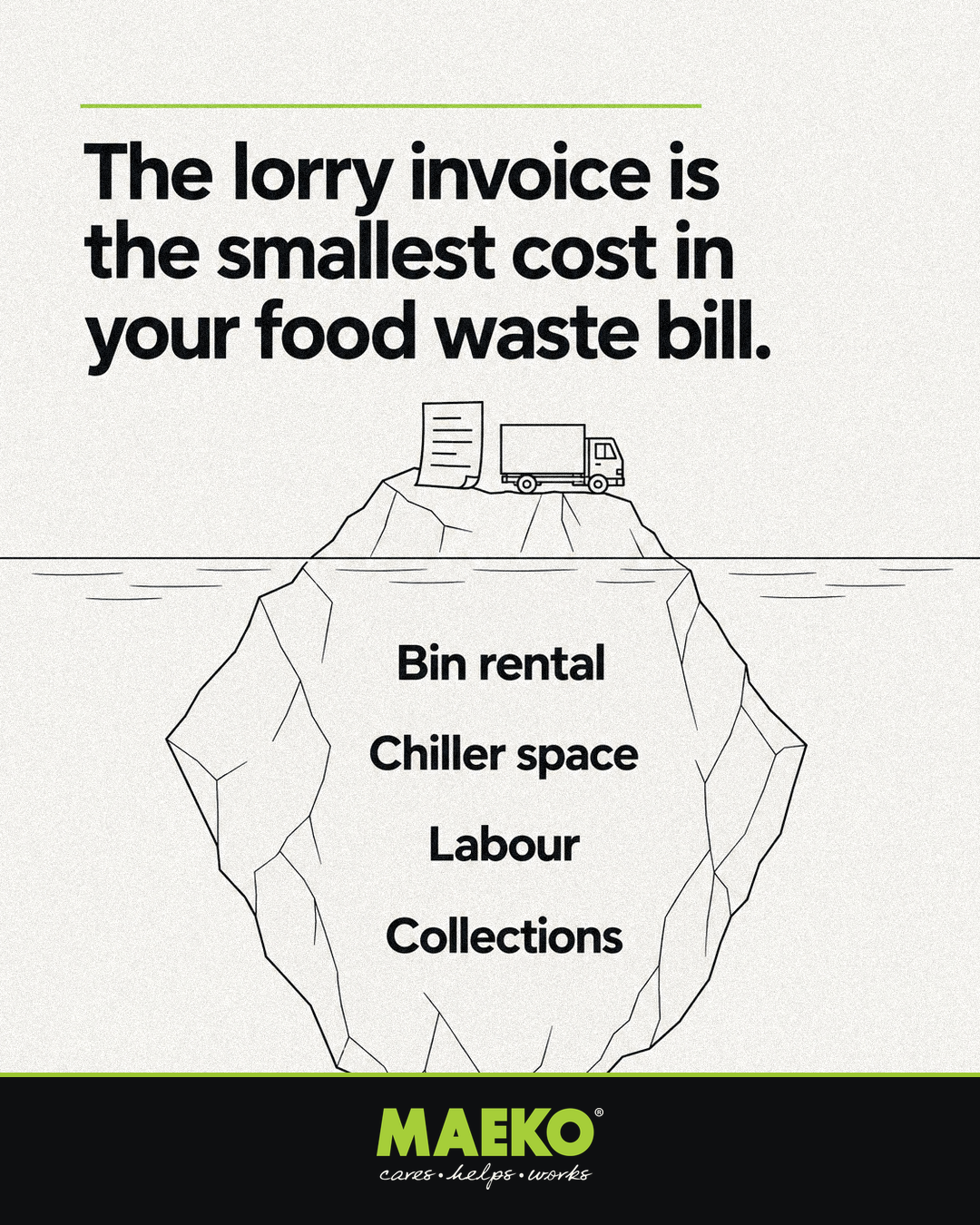
The figure everyone quotes for food waste is not the figure you pay.

If you sign off the F&B P&L, look past the hauler's quote. Here is what a Klang Valley hotel kitchen is really paying for.

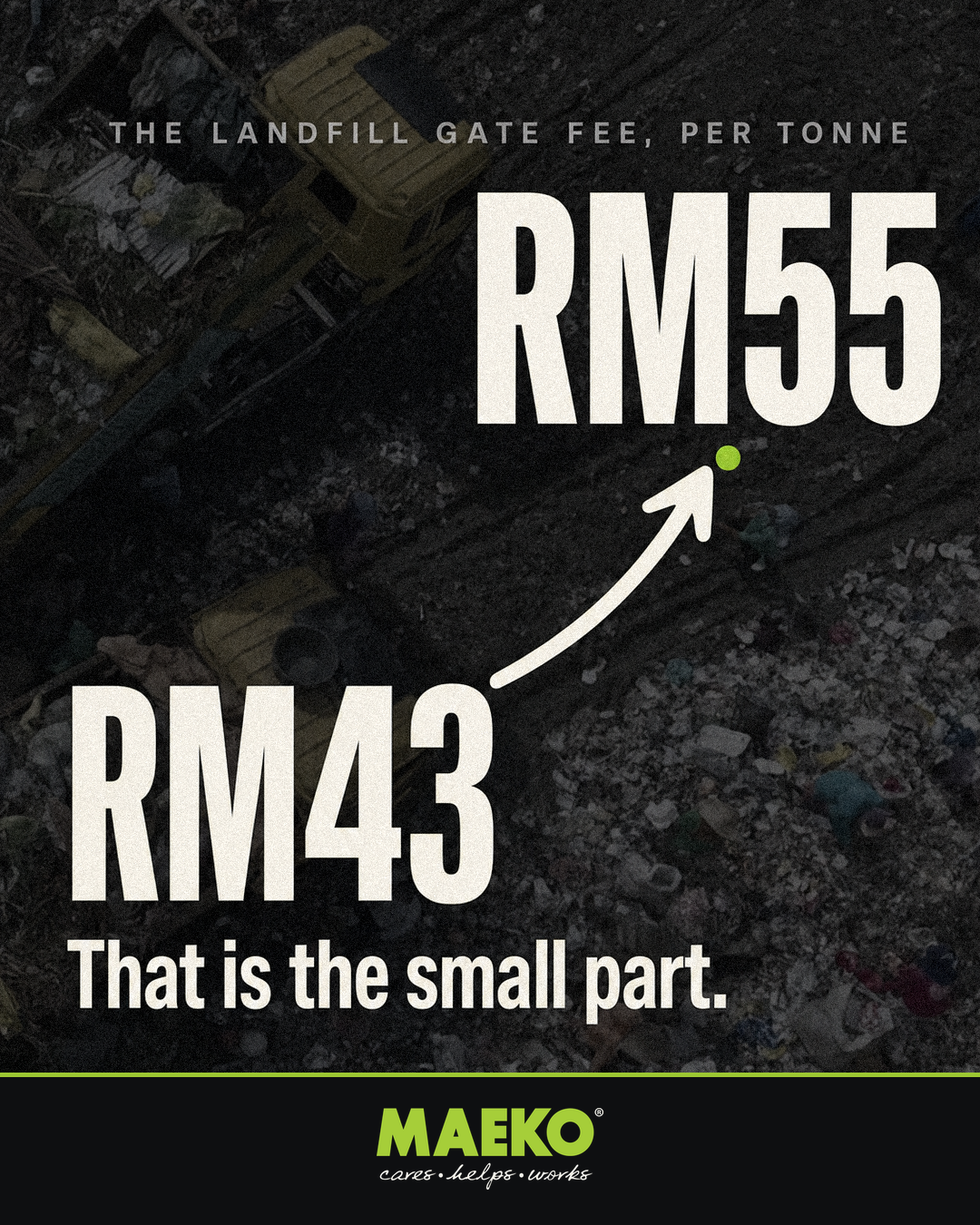
Start with the number everyone quotes: the gate fee at Jeram landfill in Selangor, RM43 a tonne today, set to rise to RM55 when its waste-to-energy plant comes online. Here is the catch. That is the rate the council pays the landfill, not the rate you pay. Your waste leaves through a private collector, and a commercial kitchen is billed more.

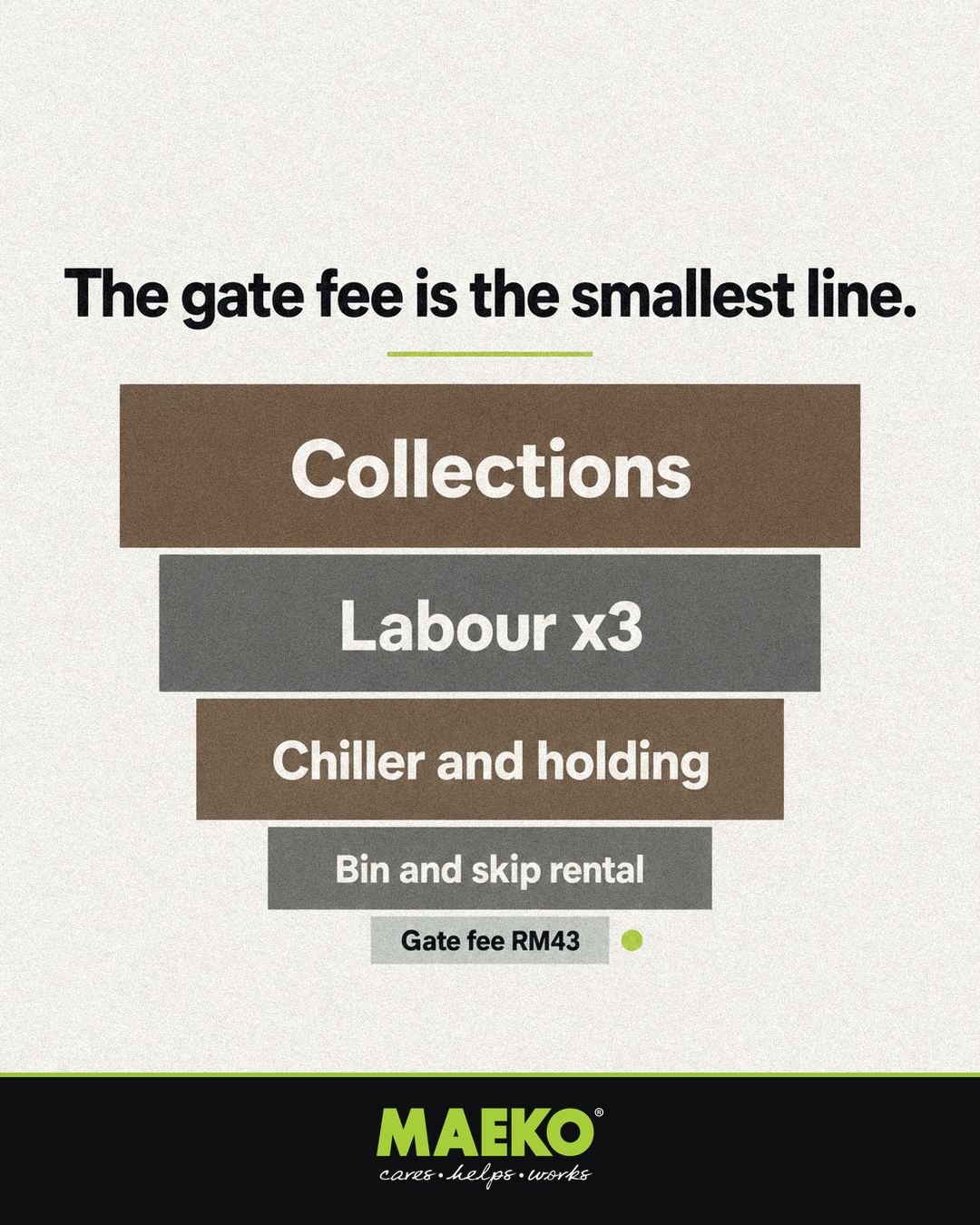
Your real cost is the lines that never arrive with their own name:

Bin and skip rental, fixed every month whether the bin is full or not.
Chiller space to hold wet waste so it does not rot before the next pickup.
Labour three times over: kitchen to store, store to loading bay, then wash-down.
The collections themselves, trip after trip.

Your collector rolls the collections, the bin rental and the gate fee on your commercial waste into one monthly price. The chiller space and your team's hours never appear on any invoice.

An on-site food waste machine does not erase the bill. It shrinks what drives it: volume. Up to approximately 80% less volume in a 24-hour cycle means a smaller bin, fewer pickups, and less to hold, move and wash. Less collection, not none.

One honest note: we publish volume reduction. We do not publish a mass-reduction figure.

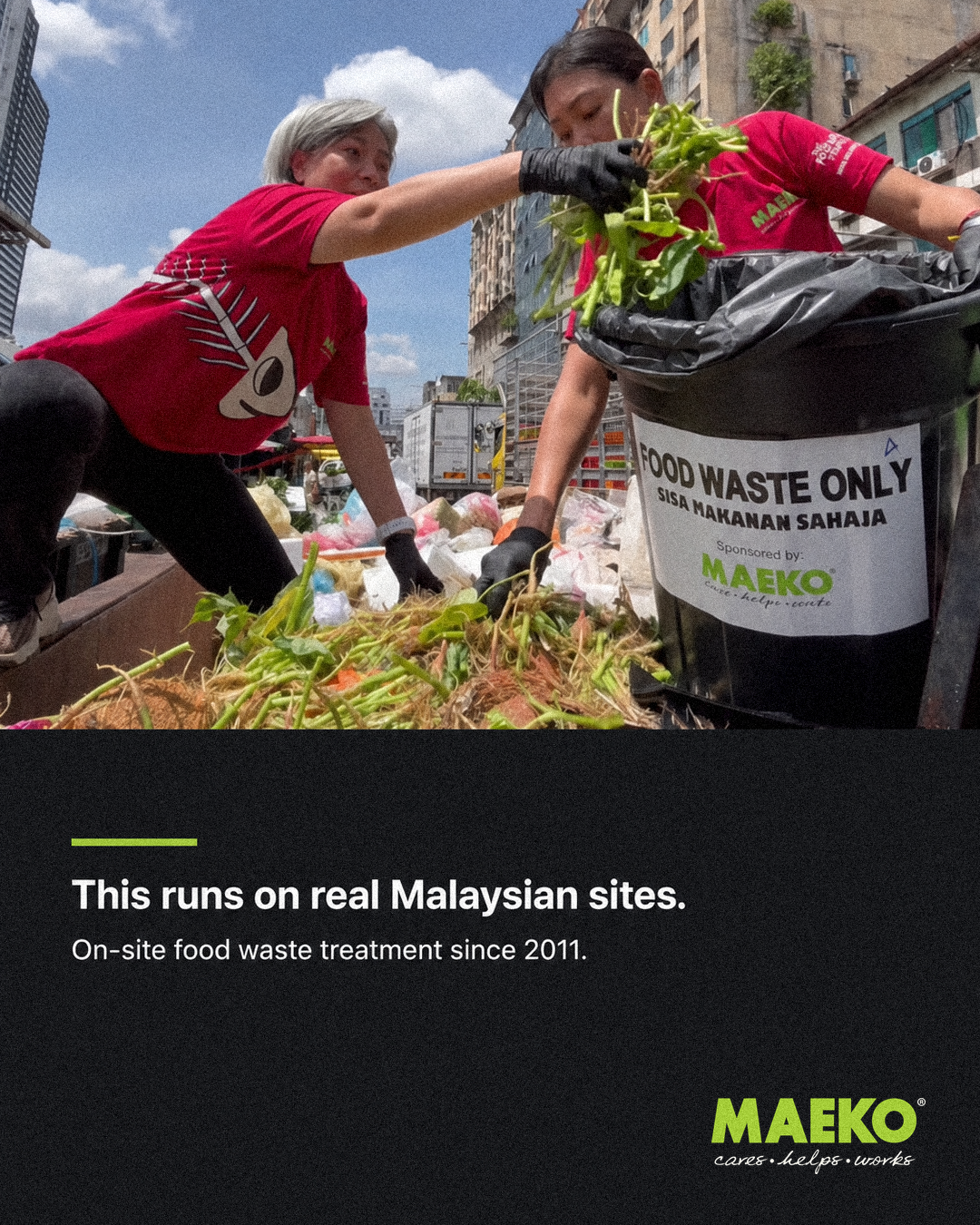
MAEKO has run on-site food waste treatment in Malaysia since 2011. Over 4 million kg kept out of disposal (UN Foundation, September 2019).

Comment "MAEKO" for more enquiries.

#FoodWaste #FoodWasteMalaysia #HospitalityMalaysia #FacilitiesManagement #Selangor
Approved text. RM55 no longer tied to "January 2026", Jeram named as in Selangor, and the billing line corrected.
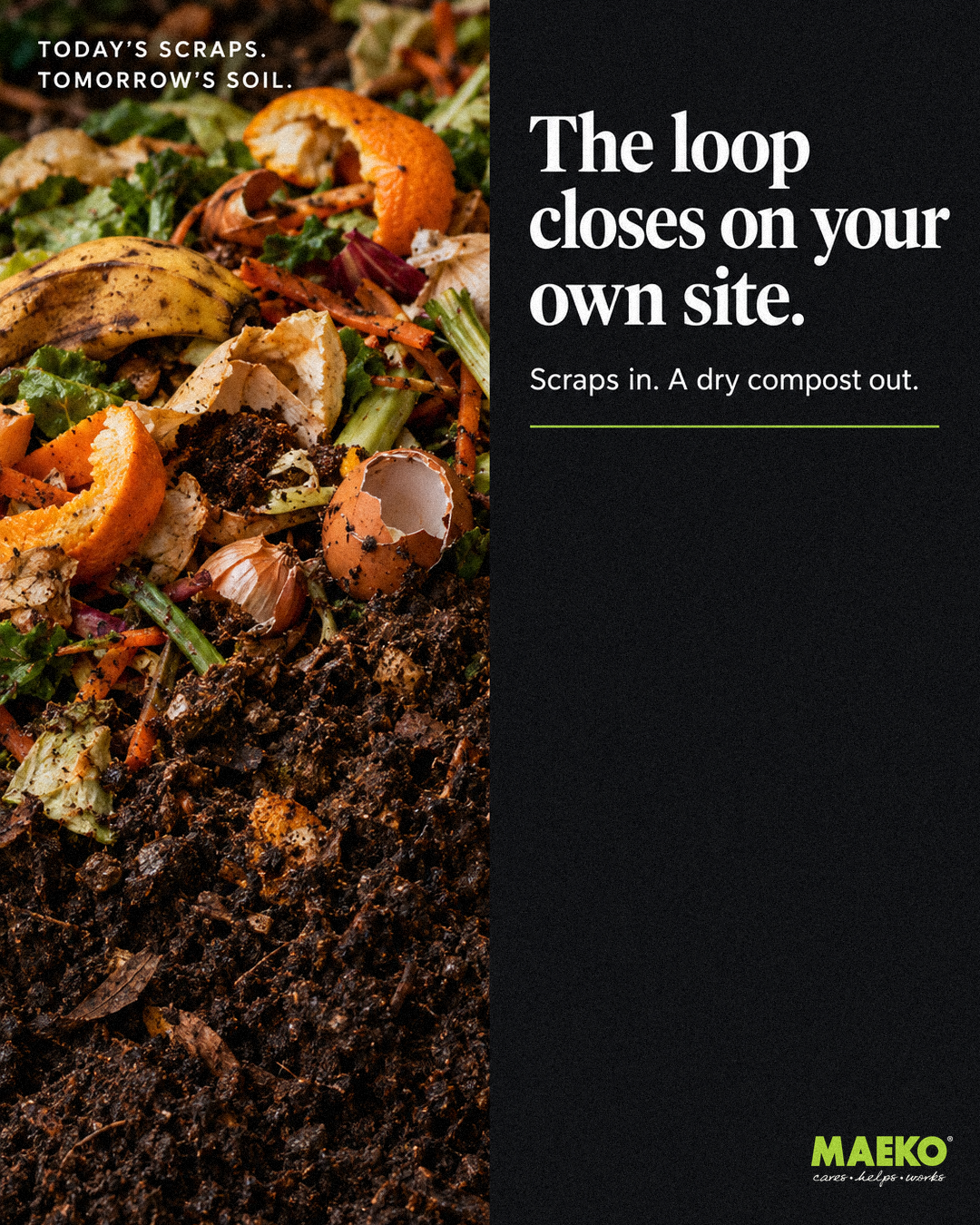
Heads-up: Slides 1 to 3 still call the gate fee "smallest", and slide 5 has a sprout. You approved them as they are.
LinkedIn article: food waste cost per tonne
Caption ready
LinkedIn · MAEKO Malaysia profile · a different day from b2-09
Article text only
Title
Food waste cost per tonne, Malaysian hotel: what it really adds up to
Body
The number everyone quotes for the cost of food waste is the landfill gate fee at Jeram in Selangor: RM43.00 a tonne, set to rise to RM55.00 when the landfill's waste-to-energy plant comes online. Here is what the pitch decks leave out. That is the rate the local council pays the landfill. It is not the rate your kitchen pays, and it is not a line you will ever find on your own invoice.

Run that council rate across a year and a 400 kg-a-day kitchen sends out 146 tonnes (400 kg × 365 days), which at RM43.00 a tonne comes to about RM6,278. Treat that as a floor on one hidden line, not your bill: a commercial kitchen is billed more than the council rate, and the 400 kg is an assumption. Weigh your own kitchen for seven days before you trust any number in this article, including this one.

What does a hotel actually pay per tonne of food waste?

The RM43.00 a tonne is the council gate fee at the Jeram sanitary landfill in Selangor, effective 1 July 2023. It is set to rise to RM55.00 a tonne when the landfill's waste-to-energy plant comes online (Dewan Negeri Selangor records).

That is the number most people quote when they talk about the cost of food waste. It is not your number. Your food waste leaves through a private collector, a commercial kitchen is billed more than the council rate, and it reaches you as one bundled monthly price. So you cannot read your true cost per tonne off RM43. You can read only the direction it is heading, which is up.

Why can't you see this cost on one invoice?

Your contractor bundles the gate fee on your commercial waste, the haulage and the bin and skip rental into one monthly price. You cannot pull the gate fee out of that number, because your collector never separated it for you. Your chiller space and your team's hours never appear on any invoice at all.

That bundling is the constraint. Bin and skip rental is fixed every month whether the bin is full or not. Chiller space holds wet waste so it does not rot before the next pickup. Labour moves the waste three times over: kitchen to store, store to loading bay, then wash-down. The collection trips happen whether the bin is half full or overflowing. Not one of those lines arrives on your invoice with its own name, and every one of them is driven by the same thing: how much waste there is to move.

What actually changes once waste is treated on site?

An on-site machine does not remove the bill. It shrinks the volume that has to be stored, moved and collected, which shrinks every line that volume was driving.

MAEKO's published figures: a 24-hour treatment cycle, and up to approximately 80% less volume by the end of it. A smaller bin needs fewer pickups. Fewer pickups need less labour to load and less chiller space to hold. Less collection, not none, because the reduction is in volume, and your contractor still has to come for whatever remains.

MAEKO has manufactured and run on-site food waste treatment machines in Malaysia since 2011, treating over 4 million kilograms (UN Foundation, September 2019) that would otherwise have gone to landfill.

What is the tax incentive you may have heard about?

If someone told you the government simply hands back a slice of the purchase price, they got the mechanism wrong. It is a tax allowance against income, not money off the invoice, and it works out to a smaller share of the price than that pitch implies.

The full mechanism, stated once and in full: GITA Asset Tier 2 is an allowance of 60% of qualifying capital expenditure, set against up to 70% of statutory income. At the 24% corporate rate the full allowance is worth up to 14.4% of the price as a reduction in tax payable, not a discount on the invoice, and only to the extent the company has statutory income to absorb it; unabsorbed allowance carries forward. This is not tax advice. Confirm the position with your tax agent.

Three conditions apply together, not separately: MOF-approved, MGTC-verified, MyHIJAU-listed. The expenditure must be incurred by 31 December 2026.

There is also a proposal in Budget 2026 to raise this to 100% for MyHIJAU-recognised products made locally in Malaysia. It has not been gazetted and no commencement date has been announced. Treat it as upside if it happens, never as a number you can bank today.

What does on-site treatment not solve for you?

It cuts the volume of waste. We publish volume reduction. We do not publish a mass-reduction figure. What leaves the machine is a smaller, less frequent pickup, not an empty loading bay.

Two more honest limits worth stating before anyone signs anything. First, cutting waste volume by up to approximately 80% does not automatically cut a bundled monthly invoice by the same share; the saving only shows up on your bill once your contract is renegotiated to fewer or smaller pickups. If your contractor charges a flat monthly rate regardless of volume, ask them, in writing, what a smaller bin actually changes. Second, whatever comes out the other end still needs somewhere to go. A machine without a named place to send its output has swapped a waste problem for a storage problem, so confirm it before delivery, not after. MAEKO buys finished compost back, from 200 kg a trip in the Klang Valley.

How do you size a machine for your kitchen?

Start by weighing what you actually throw out, every day, for seven days, including your busiest banquet day.

Your average day and your peak day are different numbers. A vendor who only asks for one of them is sizing off the wrong one.

Before you sign with any vendor, ask them four things directly. What is the published throughput range for the product line you are buying, not a single model's marketing number? What happens to the output, and who has agreed in writing to take it? Is the specific unit you are buying currently listed in the MyHIJAU Directory, with the listing valid on the date you plan to incur the expenditure? And what does the vendor not publish, on energy draw, on oil and grease tolerance, on anything else that matters to your kitchen? A vendor who answers all four in writing is one you can put in front of your finance team without being embarrassed.

Comment "MAEKO" for more enquiries.
Set these six lines as headings in LinkedIn's article editor:
What does a hotel actually pay per tonne of food waste?
Why can't you see this cost on one invoice?
What actually changes once waste is treated on site?
What is the tax incentive you may have heard about?
What does on-site treatment not solve for you?
How do you size a machine for your kitchen?
Approved text. RM55 date fixed, billing line corrected, and MAEKO's compost buy-back added.
Heads-up: Before posting, check the GITA 100% line is still "not gazetted".
On hold: needs a fix before posting
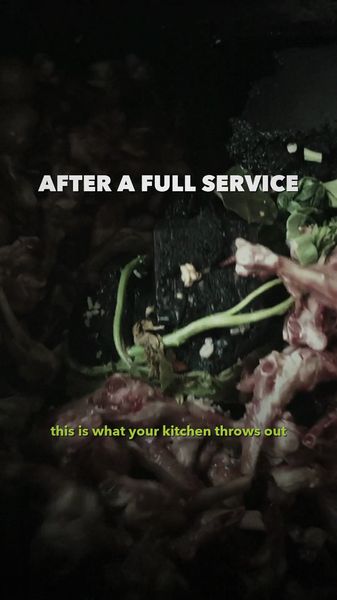
The three reels need their on-screen text fixed first. Their captions are ready for when they are.
Today's scraps. Tomorrow's soil.

Treated on site, food scraps become a dry compost you can use, and the loop closes closer to where the waste is made. Less to the lorry. More back to the soil. That is what on-site food waste treatment looks like for a Malaysian kitchen.

DM us to find out more.

#circulareconomy #compost #foodwaste #Malaysia #sustainability
Same idea and headline as the 19 Sep post "Today's scraps, tomorrow's soil".
What happens to your leftovers after the lorry leaves?

The reel has the numbers. The better answer starts before the lorry: scraps go into a MAEKO machine at close of service, on your own site, and one 24-hour cycle turns them into a dry compost you can use. Less collection, not none.

DM us to find out more.

#foodwaste #compost #circulareconomy #Malaysia #sustainability
On screen it says about 39,000 tonnes a day and 30.6% food, which contradicts our live 15 Sep post (36,900 tonnes, over 40%). It also says "in 40 seconds" but runs 31 s.
Food scraps don't have to leave your site as rubbish.

Treated on site in one 24-hour cycle, the day's leftovers turn into a dry compost you can use, with up to approximately 80% less volume left to collect. That means a smaller bin, fewer pickups, and numbers you can check for yourself.

Built in Selangor since 2011, running in workplaces across Malaysia. DM us to find out more.

#foodwaste #compost #circulareconomy #Malaysia #FandB
Caption is fine. On screen: an em-dash, "up to 80%" without "approximately", and two unverified lines ("Compost supplied across Malaysia", "Tracked in real time").
Bones do not go in a blender.

Hotel and restaurant kitchens throw out bones and shells every day. MAEKO's HARDSTOCK machine has a crushing chamber, not a blade set, so they go in on site with the rest of the scraps. One 24-hour cycle later, they are a dry compost you can use, with up to approximately 80% less volume. Cutlery, plastic and packaging still come out first at the bin.

DM us to find out more.

#foodwaste #foodwastemachine #FandB #hospitality #Malaysia
Needs the typography polish you planned. The last machine shot looks like a render, not the real machine, and "It all goes in" is too close to a banned claim.
After you post
Send me the link of each post (or just tell me which ones went out) and I'll record them.